Is Interfacing Necessary for a T-shirt Quilt?
No. Interfacing is not necessary for a well-made T-shirt quilt. Modern sewing machines, improved construction methods and T-shirt quilt styles without cotton sashing make it possible to sew stretchy T-shirt material without adding iron-on backing.
Do T-shirt Quilts Need Interfacing?
 No. A T-shirt quilt does not need interfacing.
At Too Cool T-shirt Quilts, we have made T-shirt quilts without iron-on interfacing since 1992. Our construction methods and equipment allow us to work with stretchy T-shirt fabric without adding a stiff layer behind every block.
Some T-shirt quilt makers use interfacing because it makes stretchy fabric easier to cut and sew. We use techniques that eliminate the need for it. The result is a softer quilt without an extra layer of adhesive-backed material.
In This Article
- What Is Interfacing or Iron-on Backing?
- Why Was Interfacing Originally Used in T-shirt Quilts?
- The Original Problem: Sewing T-shirt Material to Cotton
- Why Too Cool T-shirt Quilts Does Not Use Interfacing
- How Modern T-shirt Quilt Styles Eliminated the Need for Interfacing
- How Modern Sewing Machines Changed T-shirt Quilt Construction
- Why Do Some T-shirt Quilt Makers Still Use Interfacing?
- Does Interfacing Make a T-shirt Quilt Stiff?
- What Are the Risks of Using Iron-on Interfacing?
- Can Jerseys and Performance Shirts Be Used Without Iron-on Interfacing?
- Is a T-shirt Quilt Without Interfacing Better?
- For Quilt Makers Who Want to Work Without Interfacing
What Is Interfacing or Iron-on Backing?
 Interfacing is a material used on the backside of fabric to make it more rigid. It can stiffen fabric, add bulk and keep knit fabrics from stretching out of shape.
Interfacing is also known as iron-on backing because many types can be ironed directly onto fabric. This type of interfacing has one side coated with a heat-activated glue. When it is ironed onto another piece of material, the interfacing and fabric are fused together.
There are many different types of interfacing. Some are very heavy and will stiffen fabric dramatically. Others are lighter and more flexible and do not add as much rigidity.
Even the lightest interfacing will stiffen the fabric it is ironed to. That is its purpose.
Why Was Interfacing Originally Used in T-shirt Quilts?
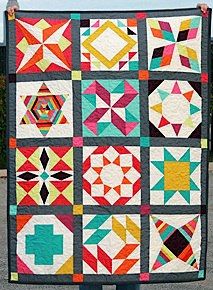 The answer has a lot to do with when T-shirt quilts first became popular.
During the late 1980s and early 1990s, we began acquiring an excessive number of T-shirts. The price of T-shirts and screen printing decreased, while the number of events where T-shirts were given out increased.
T-shirts simply became what we wore. We were all wearing blue jeans and T-shirts.
During this same period, quilt making experienced a resurgence. Many quilt makers began with a project called a sampler quilt.
As the name suggests, quilt makers created sample blocks from many different quilt patterns. These blocks were then put together in rows and columns separated by sashing.
Sashing is the cotton fabric used to separate the rows and columns. It can be very narrow, such as one inch wide, or much wider, such as three or four inches.
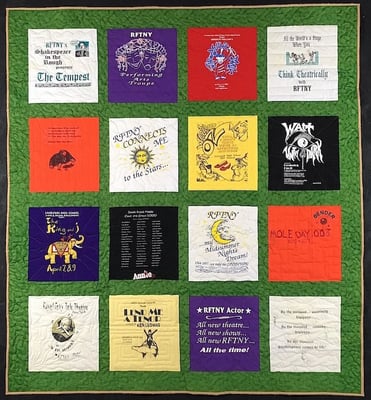 When quilt makers were first given piles of T-shirts, the sampler quilt method was foremost in their minds. They cut the T-shirts into uniform blocks and arranged them in rows and columns separated by cotton sashing.
This became the traditional style of T-shirt quilt. A traditional T-shirt quilt is usually characterized by:
- Uniform-size blocks
- Blocks lined up in rows and columns
- Cotton sashing between the blocks
Too Cool T-shirt Quilts does not make traditional-style T-shirt quilts. See what styles we do make here!
The Original Problem: Sewing T-shirt Material to Cotton
Early quilt makers quickly ran into a problem.
They were trying to sew stretchy T-shirt material to the non-stretchy cotton fabric used for sashing. As the two fabrics passed through the sewing machine, the T-shirt material often stretched and became longer than the cotton.
The sewing machine technology and the experience needed to work with T-shirt material were not there yet.
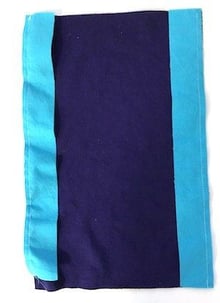
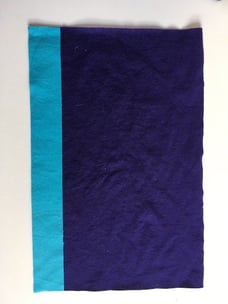 The photos here show a strip of teal cotton sashing ready to be sewn to a piece of purple T-shirt material.
In the second photo, the left side shows what can happen without the right skill or sewing machine. The purple T-shirt material has stretched longer than the teal cotton sashing.
The strip on the right was sewn with the correct sewing machine by an experienced quilt maker. It shows that stretchy T-shirt fabric can be sewn to non-stretchy cotton without a problem.
The Original Solution: Iron-on Interfacing
The original solution was to use iron-on interfacing.
The interfacing stiffened the T-shirt material and kept it from stretching out of shape while it was being cut and sewn. It worked, and iron-on interfacing became the standard method for making T-shirt quilts.
Except I did not get the memo.
Why Too Cool T-shirt Quilts Does Not Use Interfacing
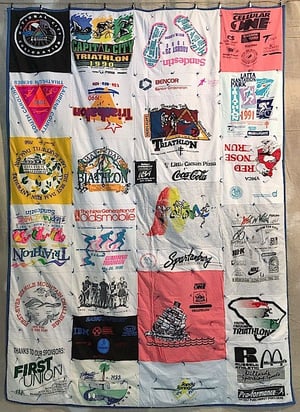 I made my first T-shirt quilt in 1992. At that time, the internet was not what it is today. I could not simply Google, “How do you make a T-shirt quilt?” Read more about my first T-shirt quilt and what I learned from it here.
As a result, I made it up as I went along. There were a lot of T-shirt quilt rules I did not know about:
- Iron-on interfacing should be applied to every T-shirt before it is cut to its final size.
- All the blocks should be the same size.
- The blocks should be laid out in rows and columns.
- The rows and columns should be separated by cotton sashing.
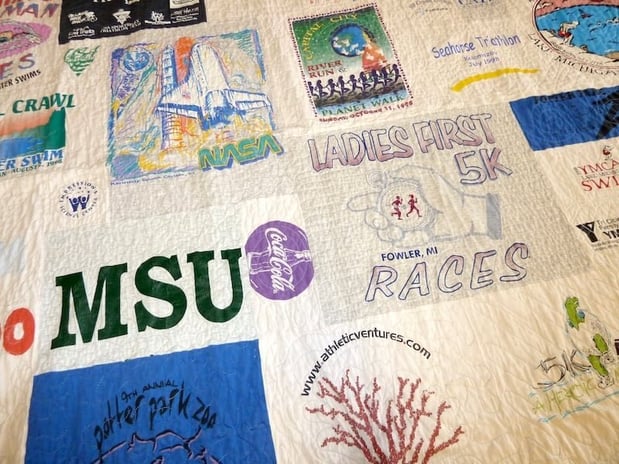 I broke all the rules. The biggest rule I broke was using iron-on interfacing.
I did not use it because I did not know that I was supposed to. I am thankful every day for not know about the rules.
Had I been able to search online for directions, I probably would have made my first T-shirt quilt just like everyone else was making them. Instead, I developed a new method.
The quilt here is from 1998. And it was used a lot! No interfacing and a great proof of longevity.
A Different Style of T-shirt Quilt Eliminated the Need for Interfacing
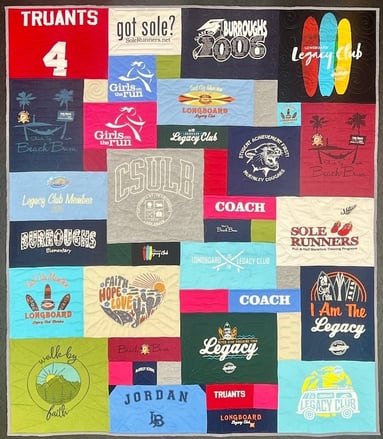 My solution was simple. I did not use cotton sashing. Without cotton sashing, I was primarily sewing T-shirt material to T-shirt material. Sewing two pieces of T-shirt material together is much easier than sewing a stretchy T-shirt to a non-stretchy strip of cotton.
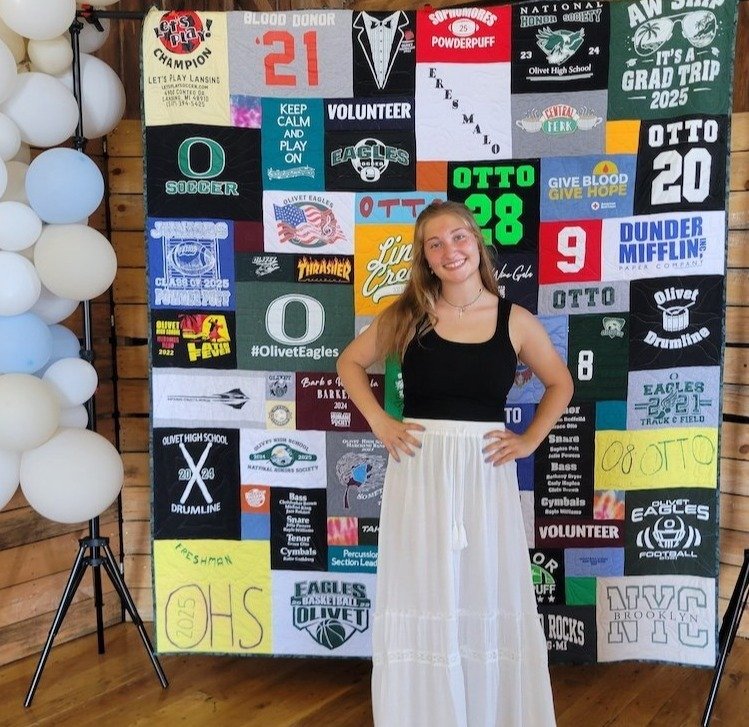
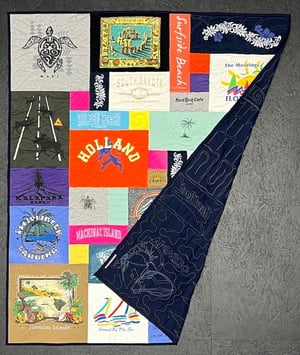
This led to the puzzle-style T-shirt quilt we make today. Our quilts use different-size blocks fitted together without traditional rows, columns or sashing. Because of this construction method, we do not need to stiffen every T-shirt with iron-on interfacing.
Modern T-shirt quilt styles have eliminated the need to add large amounts of non-T-shirt material to a quilt.
Modern Sewing Machines Also Changed T-shirt Quilt Construction
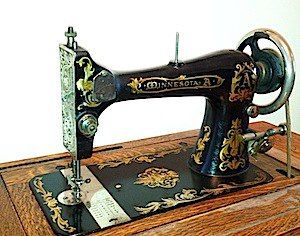 Sewing machine technology has evolved significantly over the past 30 to 40 years.
You can still sew with a 50-year-old sewing machine. However, many older machines were designed primarily for traditional fabrics such as cotton, wool and denim. They were not designed to easily sew two very different types of fabric together.
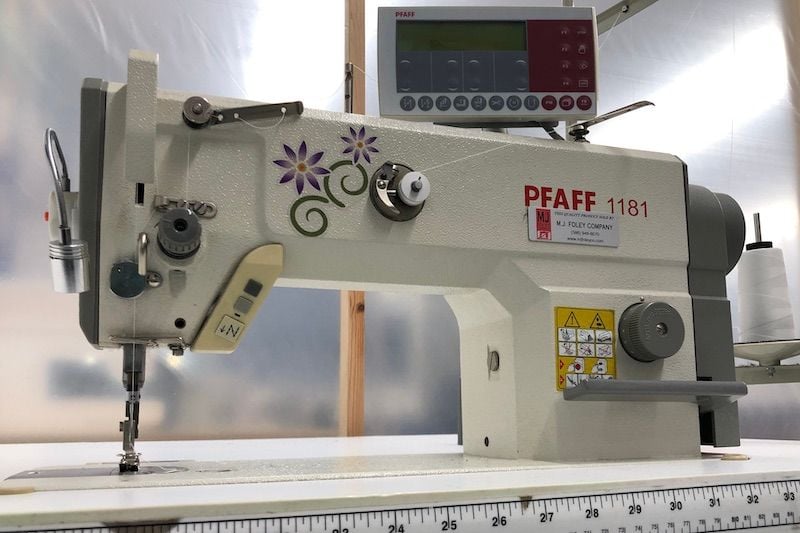
Modern sewing machines offer technology and features that make working with difficult fabrics easier. Computerized settings, better feed systems and dual walking feet can help sew cotton and T-shirt material together without stretching.
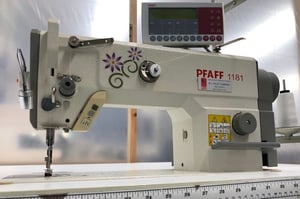 We sew cotton to T-shirt material regularly when we add borders to our quilts. It can be done without interfacing. You just have to know how to do it.
And if you want to learn how, you will need to practice, experiment and understand how your machine handles stretchy fabric.
Or you can use the methods in my book, How to Make a Too Cool T-shirt Quilt.
Why Do Some T-shirt Quilt Makers Still Use Interfacing?
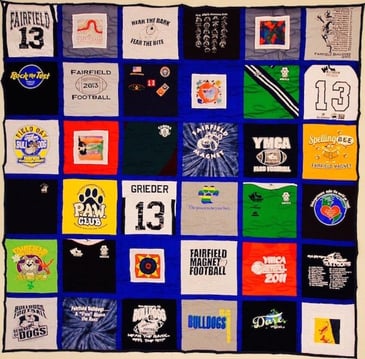 Although interfacing is not necessary, some T-shirt quilt makers still choose to use it.
-
It Makes Stretchy Fabric Easier to Control
Interfacing can make T-shirt material easier to cut and sew. It reduces stretching and allows the fabric to behave more like woven cotton. For a new quilt maker, that can make the construction process feel more manageable. -
They Make Traditional-Style T-shirt Quilts
A quilt maker using uniform blocks, rows, columns and cotton sashing may find interfacing helpful when joining stretchy T-shirt material to woven cotton. Interfacing is closely tied to this traditional method of construction. -
They Are Using an Older Sewing Machine
An older sewing machine may have difficulty feeding T-shirt material and cotton evenly. Interfacing can reduce some of those problems by making the T-shirt material more rigid. -
It Is the Method They Learned
Many quilt makers were taught that interfacing was a required step in making a T-shirt quilt. Once a method works, it can be easier to continue using it than to learn an entirely different construction process. -
They Have Not Tried Making a Quilt Without It
Even after all these years of making T-shirt quilts without interfacing, I am still asked how it can possibly work. My answer is, “Have you tried it?”
Making a T-shirt quilt without interfacing requires a different understanding of design, fabric handling and sewing. It is not simply a matter of leaving out one step. The entire construction method may need to change.
What Are the Risks of Using Iron-on Interfacing?
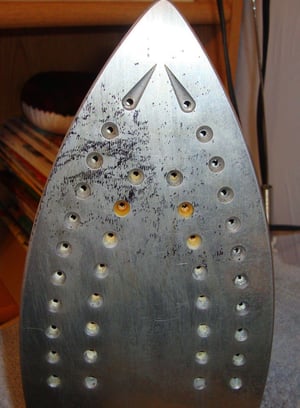
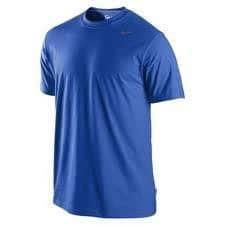 Iron-on interfacing must be fused to the back of a T-shirt using heat and pressure. That creates a risk whenever the quilt includes heat-sensitive fabric or graphics.
Many athletic jerseys, running shirts and performance T-shirts are made from polyester, nylon or other synthetic materials. Too much heat can cause these fabrics to melt, warp, shrink, become shiny or otherwise become permanently damaged.
The risk is not limited to performance fabrics.
The graphics on the front of an ordinary cotton T-shirt may be made from ink, vinyl, rubberized material or a heat-applied transfer. The cotton fabric might tolerate the heat of an iron, while the graphic on the other side softens, sticks, cracks or melts.
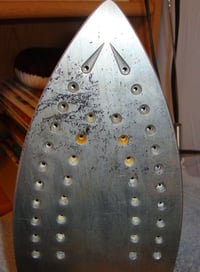 A quilt maker applying interfacing from the back of the T-shirt may not realize that the heat is damaging the graphic on the front until it is too late.
Manufacturers recommend testing the fabric, lowering the temperature and using a pressing cloth to reduce the risk. But when working with a customer’s irreplaceable T-shirts, “reduce the risk” is not the same as eliminating it. Wouldn’t that suck if those were your T-shirts?
At Too Cool T-shirt Quilts, we do not need to expose every T-shirt to the heat and pressure required to apply iron-on interfacing. Our construction methods allow us to work with the original fabric without fusing an adhesive-backed layer to it.
Will interfacing make a T-shirt quilt heavy or bulky?
 Yes. Interfacing will make a T-shirt quilt heavier and bulkier than one made without interfacing.
How stiff the quilt becomes depends on the weight and type of interfacing used. Heavy interfacing adds more rigidity, while lightweight interfacing adds less.
However, even lightweight interfacing changes how the T-shirt fabric feels and moves.
A quilt made without interfacing will generally feel softer and more flexible because the original character of the T-shirt material has not been altered by an adhesive-backed layer.
For someone having a quilt made, this is one of the most noticeable differences between construction methods.
Can Jerseys and Performance Shirts Be Used Without Iron-on Interfacing?
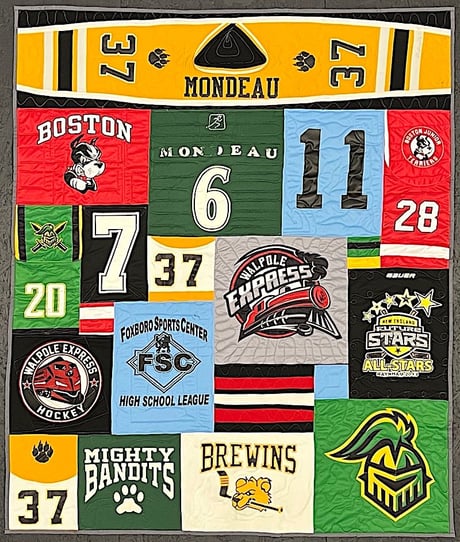 Yes. Jerseys, technical shirts and performance fabrics can be used in a T-shirt quilt without iron-on interfacing.
These materials can be slippery, stretchy or difficult to control, so they require experience and the correct equipment.
At Too Cool T-shirt Quilts, we regularly work with:
- Athletic jerseys
- Running shirts
- Bicycle jerseys
- Technical fabrics
- Mesh
- Stretchy performance material
- Shirts with zippers and pockets
The fabric does not automatically need iron-on interfacing simply because it stretches. The quilt maker needs to understand how to cut, handle, sew and quilt the material.
Also – ironing on interfacing to polyester material might cause it to melt.
Why Does Too Cool T-shirt Quilts Avoid Interfacing?
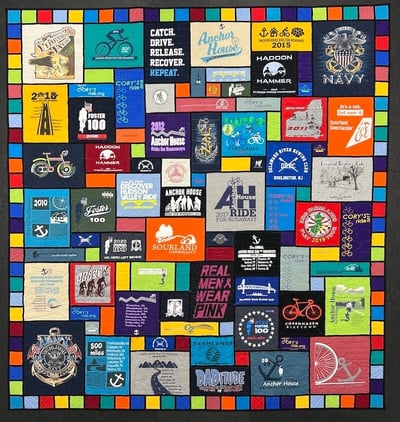 We avoid interfacing because it is not necessary for our construction method. It also changes the feel of the finished quilt. A T-shirt quilt made without interfacing:
- Remains softer
- Has more flexibility
- Contains no extra layer of adhesive-backed material
- Feels more like the original T-shirts
- Avoids the added cost of interfacing
- Does not require every shirt to be fused before construction begins
Our methods, equipment and puzzle-style designs allow us to work with T-shirt material in its original form.
Is a T-shirt Quilt Without Interfacing Better?
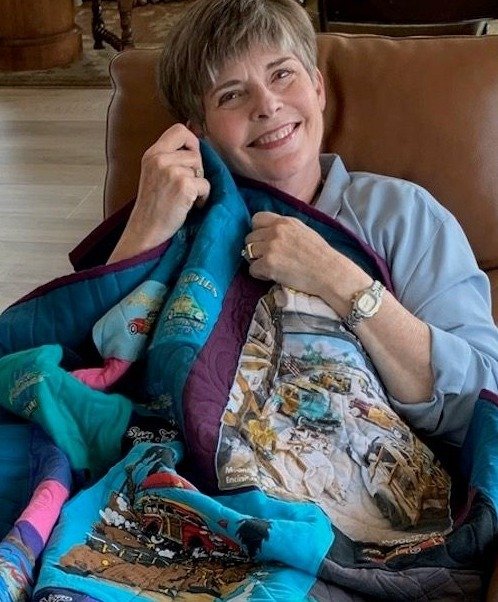 We believe it is.
Interfacing solved a real problem for early quilt makers. It allowed them to use familiar quilting methods while working with an unfamiliar stretchy material. But it was a solution designed around traditional construction methods and older sewing machine technology.
Today, quilt makers have more options.
Modern machines, improved skills and new T-shirt quilt styles make it possible to construct a high-quality quilt without fusing interfacing to the back of every T-shirt. The quilt maker’s experience and construction method matter more than whether interfacing is used.
For Quilt Makers Who Want to Work Without Interfacing
 Making a T-shirt quilt without interfacing requires more than skipping the iron-on backing. You need to understand:
- How T-shirt material stretches
- How to cut it accurately
- How to control it while sewing
- How your sewing machine feeds knit fabric
- How to design a quilt without relying on uniform blocks and cotton sashing
You will also need to practice.
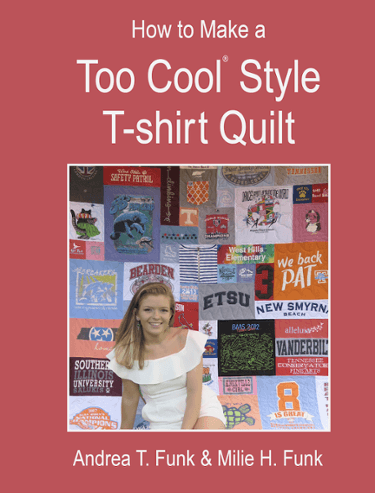
My book, How to Make a Too Cool T-shirt Quilt, explains the method I developed after making my first T-shirt quilt in 1992. It covers the construction process for making a puzzle-style T-shirt quilt without interfacing.

Conclusion
 T-shirt quilts do not need interfacing.
-
Iron-on interfacing became common because early quilt makers were sewing stretchy T-shirt material to non-stretchy cotton using traditional quilt designs and older sewing machines.
-
Modern sewing equipment, greater experience with knit fabrics and new T-shirt quilt styles have eliminated the need for it.
At Too Cool T-shirt Quilts, we have made T-shirt quilts without interfacing since 1992. Our method allows the finished quilt to remain softer, more flexible and closer to the original feel of the T-shirts.
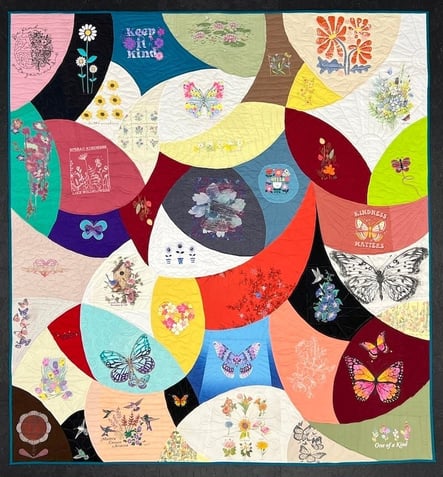
This Ultra Modern T-shirt quilt was made with NO iron-on interfacing. Learn more about Ultra Modern T-shirt Quilts Here.
For quilt makers: Learn how to make a puzzle-style T-shirt quilt without interfacing in How to Make a Too Cool T-shirt Quilt.
For customers: When comparing T-shirt quilt makers, ask whether they use interfacing and how that choice will affect the softness and flexibility of your finished quilt.