Search for topics or resources
Enter your search below and hit enter or click the search icon.
Updated May 2026
Before cutting a single T-shirt, it helps to understand what makes the Too Cool method different from every other T-shirt quilt approach.
This short overview explains the puzzle-style system — why blocks are cut in different sizes to match each graphic, why no iron-on backing is used, and how the pieces fit together without sashing. If you've ever wondered why a Too Cool quilt looks so different from the traditional block-and-grid style, this video answers that question in under three minutes.
3 min
This video covers one of the most important skills in the Too Cool method — how to cut blocks in the right size to fit it.
You'll learn how to make your own cutting templates and how to cut a standard T-shirt cleanly and accurately without iron-on backing or interfacing. Getting the cuts right at this stage is what allows the puzzle-style layout to come together properly, so every graphic is fully preserved with no cropping.
7 min
Not every item in your quilt is a basic crew-neck tee — and this video covers all the trickier ones. Andrea walks through how to cut sweatshirts, items with graphics on the sleeves, extra-large designs, very small designs, and other non-standard clothing pieces that require a different approach than a standard T-shirt.
At 26 minutes this is the most in-depth cutting video in the series, and it's the one that separates a well-made puzzle-style quilt from one where graphics get cropped or wasted. If you're working with a mixed collection of shirts and clothing, watch this before you start cutting anything.
26 min
Part 1
Andrea continues working through the full range of non-standard cutting situations you're likely to encounter in a real quilt project.
This second part picks up where 3A left off, covering additional clothing types and tricky graphics that need special handling. Together, videos 3A and 3B give you a complete reference for cutting virtually any item — not just basic T-shirts — so nothing in your collection gets left out or wasted.
22 min
Part 2
Once your T-shirts are cut, you need to figure out how big your quilt will be — and that requires a little math.
This video walks through stacking and counting your blocks, then using simple addition and multiplication to calculate your quilt's finished size. No advanced math skills needed — if you can count your T-shirts and do basic arithmetic, you can work through this. Andrea also explains what to do if the numbers aren't working out the way you'd like, including when to consider getting design help.
13 min
The layout is where the puzzle-style quilt really comes to life.
This video covers how to arrange your cut blocks into a layout map — positioning different sized pieces so they fit together without gaps, while keeping the overall design balanced and visually interesting. Unlike a traditional grid quilt where every block is the same size and placement is straightforward, the Too Cool puzzle layout requires more thought and planning. This video walks you through that process step by step so your quilt tells a cohesive story rather than looking random.
28 min
With your layout map in hand, this video tackles the next challenge — deciding exactly where each individual T-shirt block goes.
Block placement in a puzzle-style quilt isn't random. You need to consider color distribution, graphic size variety, sentimental significance, and how the eye moves across the finished quilt. Andrea walks through her decision-making process for placing each block onto the map so the finished quilt is balanced, visually engaging, and tells your story in the right order. This is the creative heart of the Too Cool method.
22 min
Before you sew a single real block, this video gets your sewing machine set up correctly and walks you through practice blocks so you can dial in your technique first.
The most important skill covered here is the half seam — a specific sewing technique that's essential to the puzzle-style layout and unlike anything used in traditional grid quilts. Half seams are what allow oddly shaped groupings of blocks to fit together cleanly. Andrea recommends every quilter practice this before touching their actual T-shirts, no matter how experienced they are.
22 min
This is the video you've been working toward — actually sewing your quilt top together. With your blocks cut, your layout mapped, and your half seam technique practiced, it's time to start stitching.
Andrea walks through the sewing sequence for a puzzle-style quilt, which is more complex than a standard row-by-row approach because the irregular block sizes have to be joined in a specific order. Follow along carefully here — the sequence matters, and getting it right means a flat, beautiful quilt top with every graphic perfectly positioned.
13 min
Your quilt top is sewn — now it needs to be prepared for the quilting stage. This video covers adding a temporary binding to your quilt top, which is needed if your long-arm quilter pins the quilt to the leaders rather than floating it on the machine.
If your quilter floats the quilt, you can skip this step. Not sure which method your quilter uses? Ask them before watching — this video is specifically for quilt makers whose long-arm quilter uses the pinned method. Getting this step right ensures your quilt top stays square and doesn't shift or stretch during quilting.
6 min
The backing fabric is one of the most visible and most felt parts of your finished quilt — and there's more to choosing it than just picking a color you like.
This video covers everything you need to know about backing material for a Too Cool style T-shirt quilt: what types of fabric work best, how much you need, how to prepare it, and what to avoid. The backing choice affects both how the quilt looks on the back and how it feels to use every day, so this is worth getting right before you hand your quilt top off for quilting.
12 min
Once your quilt top and backing are ready, you have several options for how to actually quilt the layers together — and this video walks through all of them.
Andrea covers tying, tacking, and machine quilting, explaining the pros and cons of each approach so you can choose what's right for your skill level, your equipment, and the look you want for your finished quilt. Not everyone has access to a long-arm quilting machine, and this video makes clear that there are good options for every situation, including sending your quilt top out to a professional quilter.
18 min
Your quilt has been quilted — now it needs to be trimmed and squared up before binding. This video covers cutting away the temporary binding (if you used one) and trimming the excess batting and backing so your quilt has clean, even edges all the way around.
Even if you didn't use a temporary binding, don't skip this video — the steps for trimming the excess batting and backing are exactly the same regardless of method, and getting clean edges here makes the binding stage significantly easier and neater.
3 min
Binding is the finishing strip of fabric that wraps around the edges of your quilt, enclosing the batting and backing for a clean, durable finish.
This video walks through the entire binding process from cutting and joining your binding strips to attaching them to the front of the quilt and hand stitching them down on the back. It's one of the final steps before your quilt is complete, and doing it well makes the difference between a quilt that looks homemade and one that looks truly professional. Take your time here — the binding is what people notice first when they pick up your quilt.
16 min
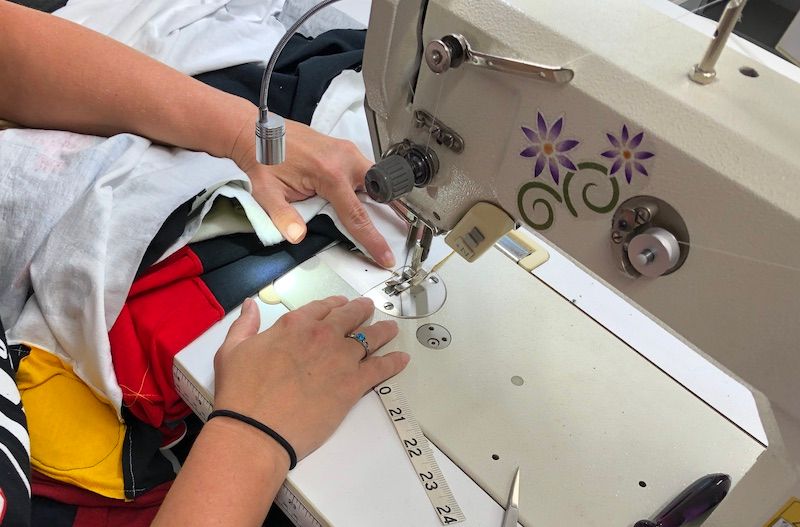
You made it! This last video in the series covers the finishing touches that complete your Too Cool style T-shirt quilt.
After 14 videos of cutting, laying out, sewing, quilting, and binding, these final steps bring everything together and get your quilt ready to use, gift, or display. Andrea walks through what to look for, what to fix if needed, and how to care for your finished quilt so it lasts for decades. Congratulations — you now know everything you need to make a puzzle-style T-shirt quilt from start to finish.
7 min