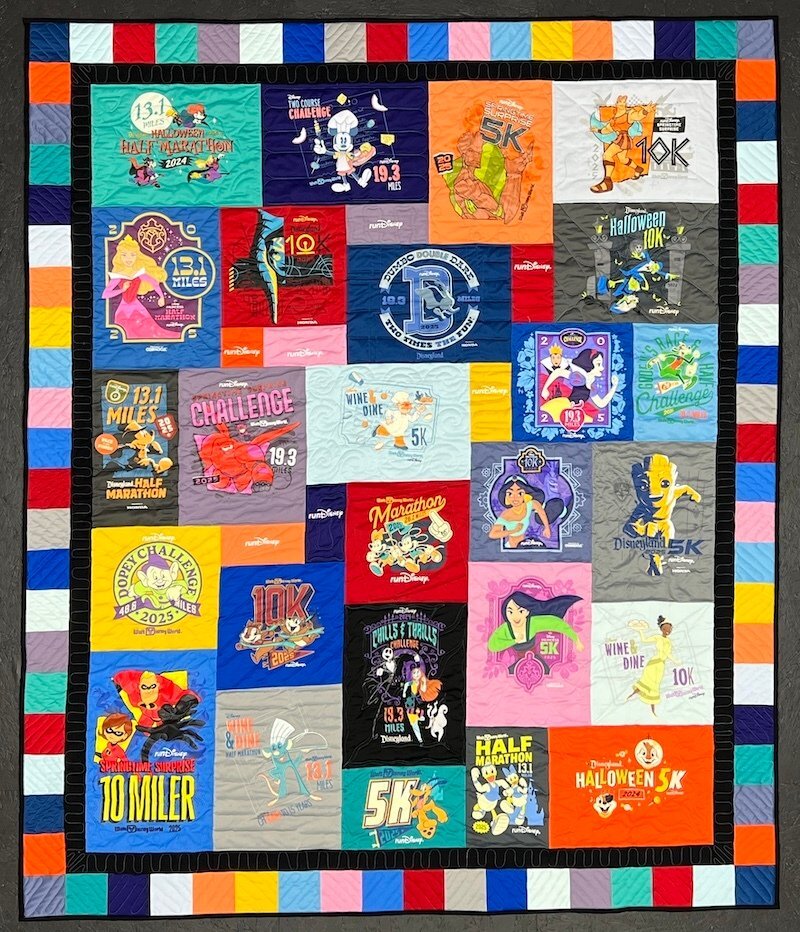
A border can change the entire look of a T-shirt quilt.
It can frame the design, add color, give the quilt more visual weight, or bring in another part of the story.
A border is not right for every quilt. But when it fits the design, it can make the quilt look more finished, more personal, and more fun.
On This Page:
Is a Border Right for Your T-shirt Quilt?
A T-shirt quilt with a border is a T-shirt quilt with an added design element around the outside edge of the quilt top.
The T-shirts are still the main part of the quilt. The border does not replace the T-shirts or become the focus. It frames the quilt and gives the outside edge a different look.
A border can be simple, colorful, pieced, or made from meaningful washable fabric. The style of border depends on the T-shirts, the size of the quilt, and the look you want.
A border might be right for you if you like the look of a framed quilt.
It might also be right if you want to add more color or give the quilt a more finished visual edge. A border can help pull together a group of T-shirts with a strong color theme. It can also give the quilt more personality when the border is made from extra T-shirt material, clothing, uniforms, denim, plaid, or other washable fabric.
A border can also be a good choice when you want the quilt to feel a little more designed without moving into a more complex quilt style.
You do not need to know exactly which border you want before you start. If you like the idea of a border, we can help you look at what makes sense for your T-shirts.
A T-shirt quilt with a border is probably not the best choice if you want the simplest version of our puzzle style quilt.
It may also not be the best choice if your budget is tight. A border adds more work and more material. If the border is not important to you, put your money into the quilt itself and skip the border.
A border may also not be right if you want to use as many T-shirts as possible in a set quilt size. A border takes up space. That can mean fewer T-shirts will fit inside the quilt.
And if you just do not like the look of borders, that is fine. Some quilts look great without one.
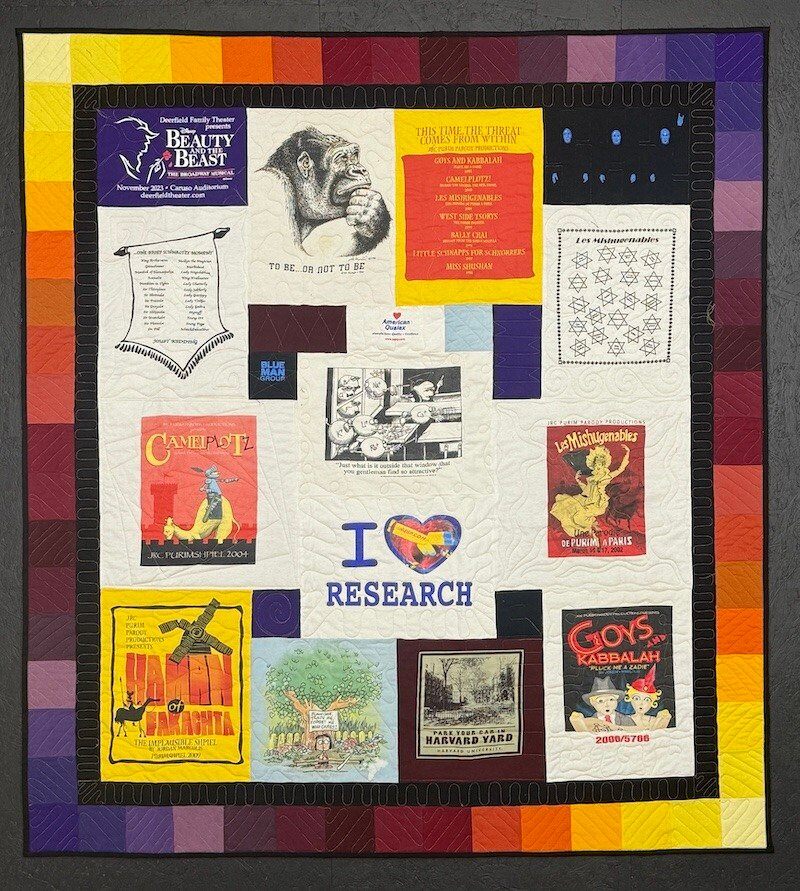
There is not just one way to add a border to a T-shirt quilt. The right border depends on your T-shirts, the size of the quilt, and how much you want the border to stand out.
Not every border style works for every quilt. Some T-shirts need a simple frame. Others can handle something more playful. If you are not sure which border style makes sense, we can help you decide after we see your T-shirts.
Specialty borders go beyond a standard border. You tell us what you are thinking, and we figure out how to make it work.
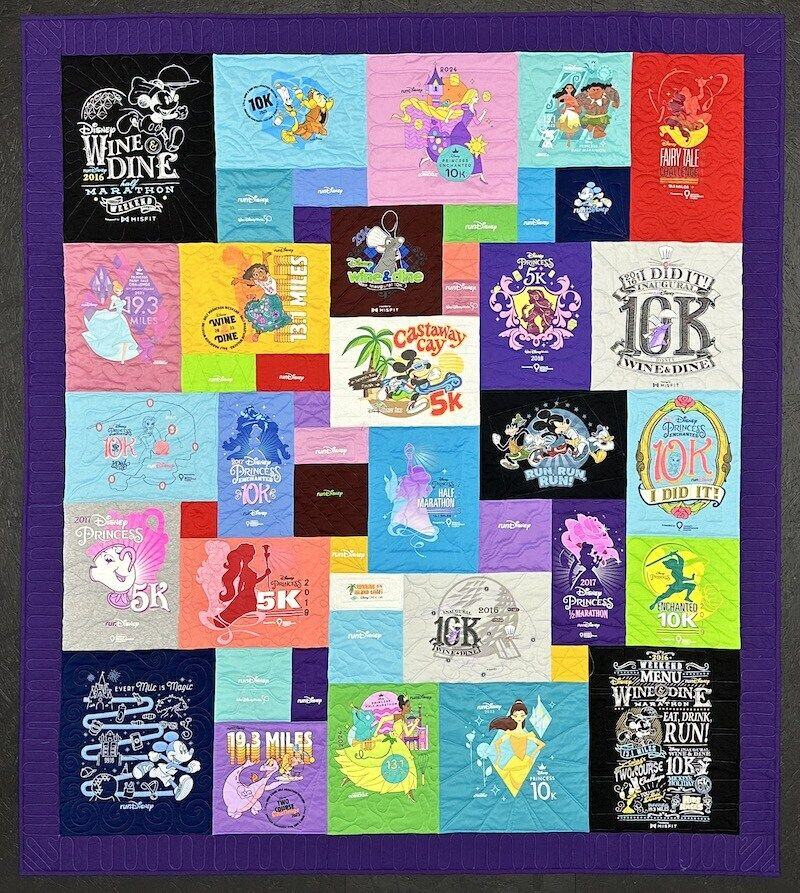
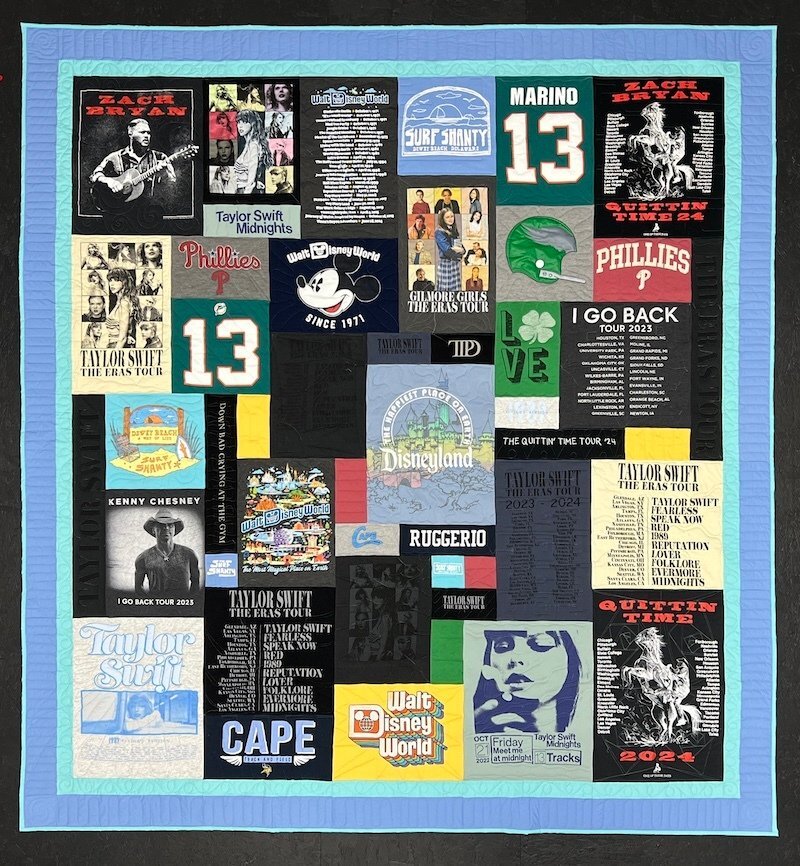
A 2" solid border adds a narrow frame around the quilt. It is a quieter option when you want a border, but do not want it to become a major part of the design.
This border becomes too narrow for quilts larger than a queen size.
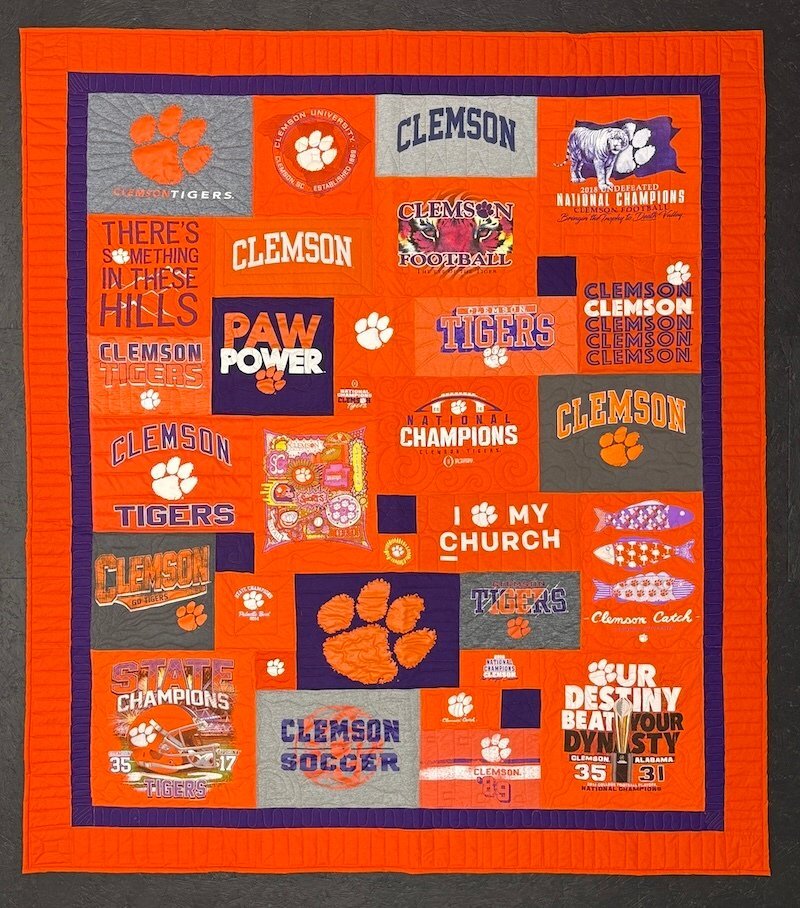
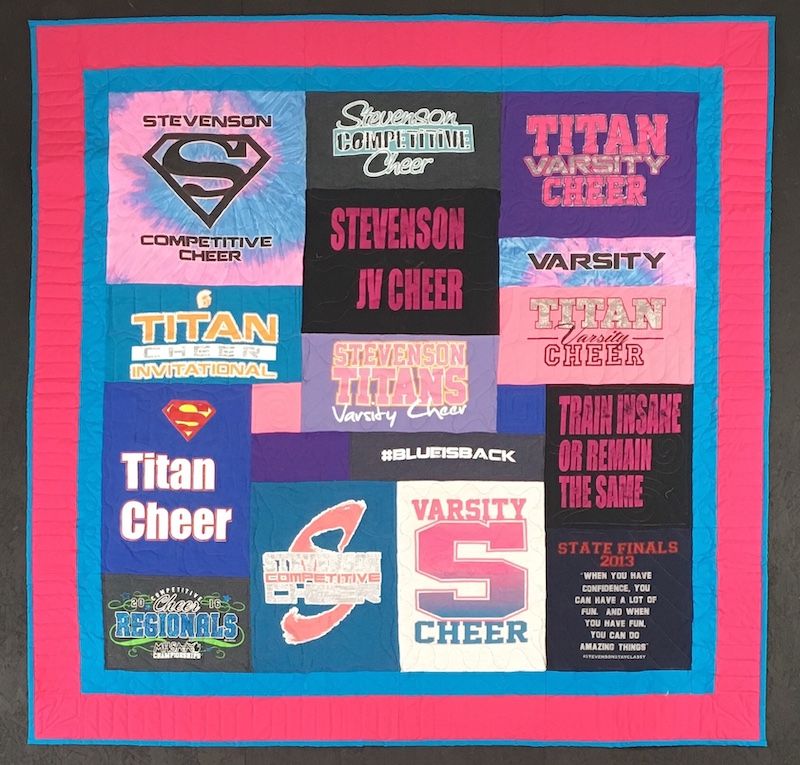
A 4" solid border gives the quilt more visual weight. This is a better choice when you want the border to clearly frame the quilt and be seen as part of the overall design.
A 4" solid border is better for larger quilts.
The double border draws your eyes down into the quilt. This border allows you to incorporate more colors from your quilt into the border.
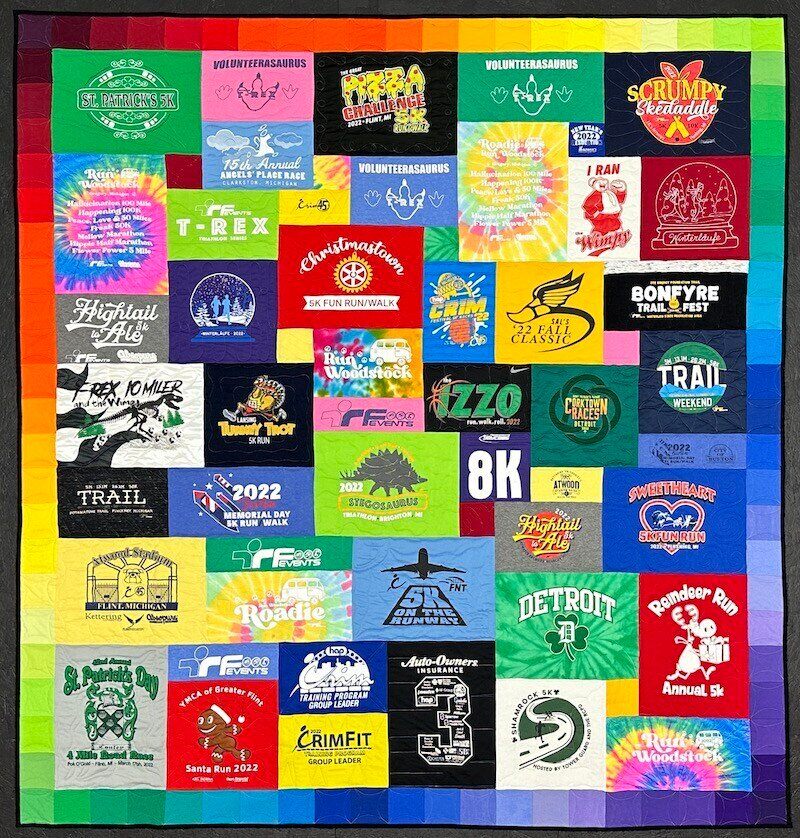
A 4" pieced border adds movement and color around the outside of the quilt. We usually make it from your leftover T-shirt fabric. We can also use cotton fabric if you do not have enough T-shirt material, or if the leftover T-shirt fabric is not the right color.
The solid 2" inner border separates the pieced border from the quilt, giving you two design elements that work together but can also stand on their own.
This is our most complex border style. The two solid borders frame the pieced border. This gives the border an inlay feel. These borders are striking.
Specialty borders push beyond a standard border. This border is made from race bibs from races this customer ran. Yes, we can use race bibs!
This special border is only on the top and bottom of the quilt. It's made up of the ribbons from medals athletes get from racing.
This specialty border was designed by the customer. You can design your own border too! Just ask us and will are happy to work with you.
Adding a border increases the price because a border becomes part of the quilt top. It has to be designed, cut, sewn, quilted, and finished with the rest of the quilt.
The cost depends on the border style, the size of the quilt, and whether adding the border changes the finished size of the quilt. A simple solid border costs less than a pieced or specialty border. A larger quilt costs more than a smaller quilt.
Because there are too many combinations to list clearly here, we do not price every border style on this page. Use our pricing calculator to choose your quilt size and border style. That will give you the best starting estimate.
Sometimes. It depends on where you start.
If you start with your T-shirts and then add a border around the finished layout, the quilt will become larger.
If you start with a set finished quilt size, the border takes up part of that space. That means the T-shirt blocks inside the quilt may need to be smaller, or you may not be able to use as many T-shirts.
This is why it helps to decide what matters most to you: the finished quilt size, the number of T-shirts, or the look of the border.
Maybe.
A border is a design choice, not a requirement. Some T-shirt quilts look better with one. Some look better without one.
Add a border if it makes the quilt look more complete, adds something meaningful to the story, or gives the quilt the finished look you want.
Skip the border if you do not care about having one, if you want a simpler version of a T-shirt quilt, or if you would rather keep the cost lower.
The right answer is the one that makes the most sense for your T-shirts, your budget, and the quilt you want to end up with.
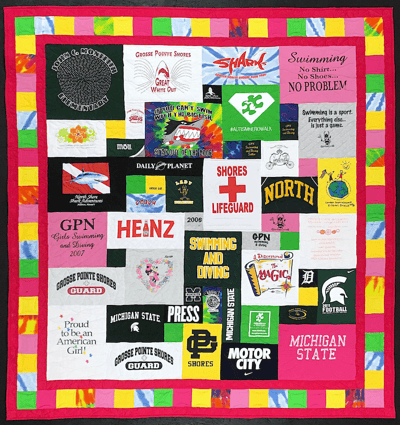
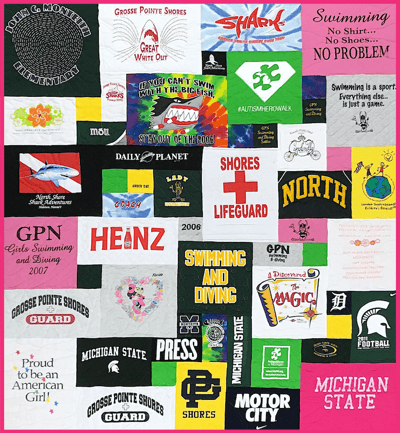
Here is the same T-shirt quilt - with and without a border.
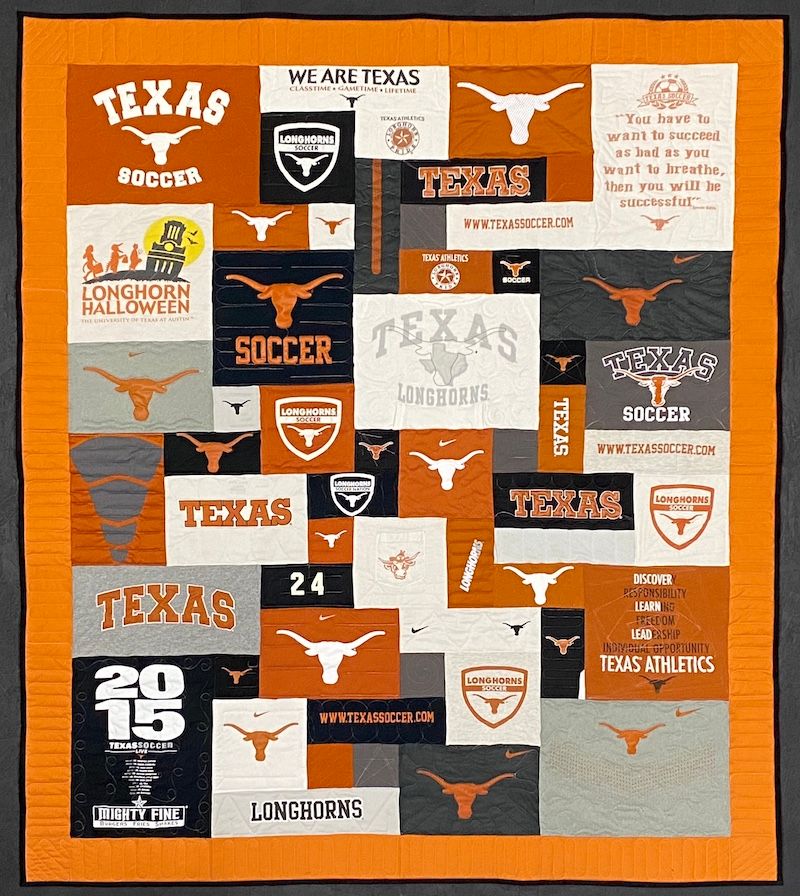
Choosing a border starts with one simple question: which one do you like?
You do not have to know the technical reason. You do not have to know the exact width. You do not have to be sure it is the perfect choice. Start by looking at the border styles and noticing what you are drawn to.
On our order form, you can choose the border style you want. You can also choose "Help, give me some options!" if you like the idea of a border but are not sure which one will work best.
That option is there for a reason. Once we see your T-shirts, we can look at the colors, the size of the quilt, and the style of the T-shirts and help you narrow down the best border choices.
And if you decide you do not want a border at all, that is an option too.
Still deciding? Read about: T-shirt quilt border ideas, compare quilts with and without borders, or learn how to choose a border color.
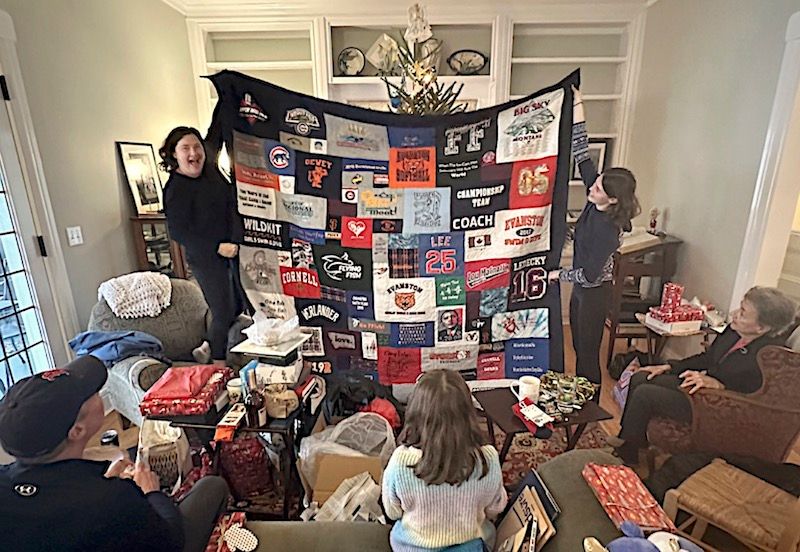
No. A T-shirt quilt can look great with or without a border. A border is a design choice, not a requirement.
Below is the same quilt with and without a border.

A border can frame the quilt, add color, add structure, or bring in another part of the story. It can be simple or more detailed.
The cost of adding a border depends on the border style, the size of the quilt, and whether the border changes the finished size of the quilt.
A simple solid border costs less than a pieced border. A larger quilt costs more than a smaller quilt. A specialty border, such as one made with race bibs, medal ribbons, clothing, or other materials, takes more time and will cost more.
Because there are too many combinations to list clearly here, we do not price every border style on this page. Use our pricing calculator to choose your quilt size and border style. That will give you the best starting estimate.
A border is not just a strip of fabric sewn around the edge of the quilt.
A border becomes part of the quilt top. It has to be designed, cut, sewn, quilted, and finished along with the rest of the quilt. If the border is pieced, uses leftover T-shirt fabric, or includes clothing or other fabric, there is even more time involved.
A border can also make the finished quilt larger. A larger quilt uses more backing, batting, binding, quilting time, and labor. So the added cost is not just for the border itself. It can also increase the cost of the entire quilt.
This is why we do not push borders on every quilt. Some quilts look great with a border. Some look better without one. If a border adds something important to the design, it may be worth it. If it does not, skip it.
A pieced border may be made from leftover T-shirt material when there is enough material, and it works for the design.
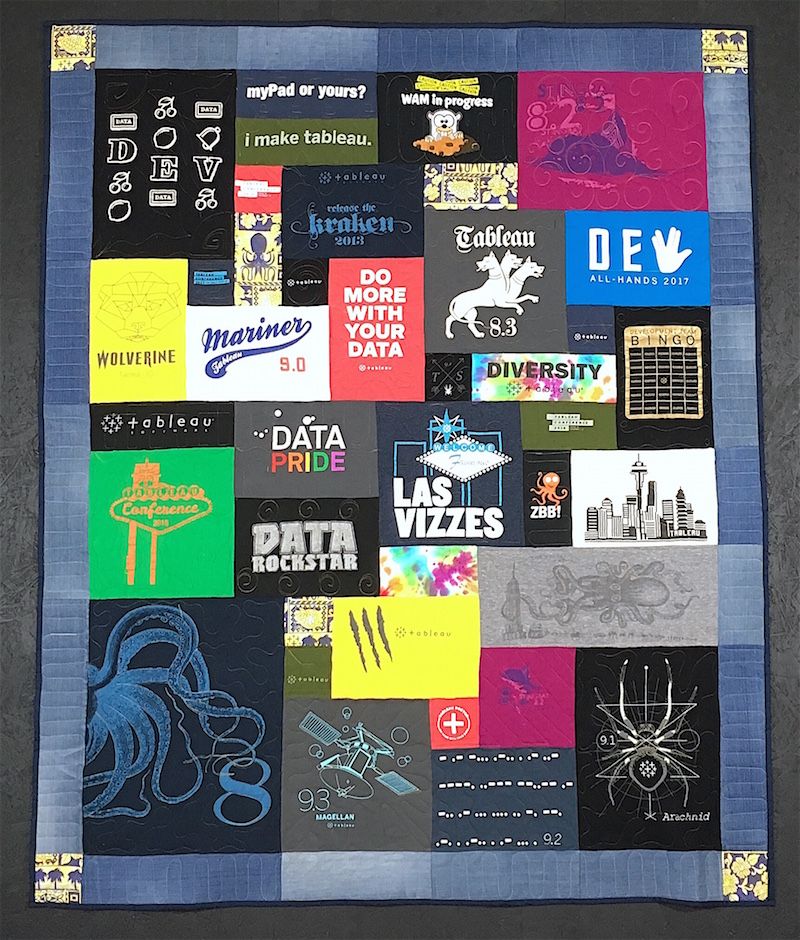
Yes, when the material is washable and works for the quilt. Examples may include dress shirts, denim, plaid shirts, warm-ups, uniforms, or other clothing.

Yes. On our order form, you can choose Help, give me some options! if you like the idea of a border but are not sure which border style will work best.
Once we see your T-shirts, we can look at the colors, the size of the quilt, and the overall style of the T-shirts and help you narrow down your border choices.
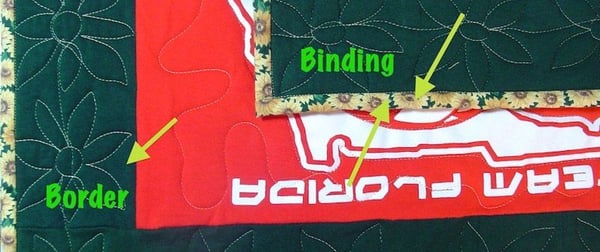
No. A border is part of the quilt design around the outside of the quilt top. Binding is the finished edge of the quilt.

No, not if the border is designed well.
The job of a border is to support the T-shirts, not compete with them. A good border can actually calm down a busy group of T-shirts by giving the quilt a clear outside edge and pulling the whole design together.
The key is choosing the right border for the quilt. Sometimes that means a simple solid border. Sometimes a pieced border adds just the right amount of color and movement. When the border is done right, it does not make the quilt busier. It makes the quilt look more finished and more awesome.

Choosing which T-shirts to include in your quilt is a very important first step.
Be sure to watch or read our instructions on how to tell us what not to include.
Your order form has all the information we need to get started on your quilt.
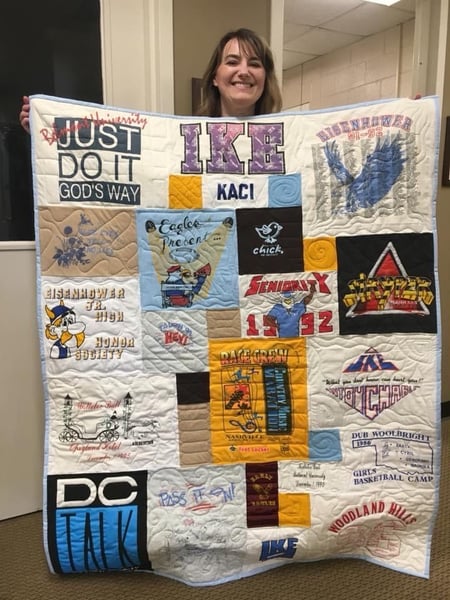
Kaci W. Standard T-shirt Quilt
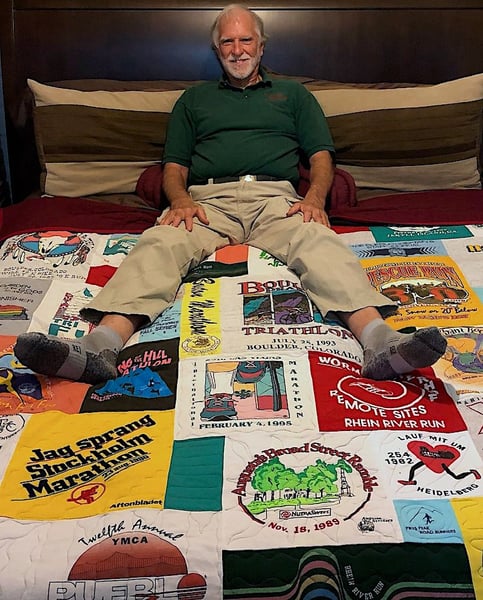
Steve H. Standard T-shirt Quilt
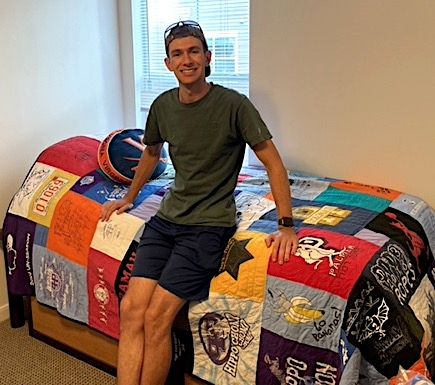
Brittanie W. Standard T-shirt Quilt
Lori G, Standard T-shirt Quilt
Over the last 30 years, we've learned so much about T-shirt quilts.
Visit our Learning Center to learn all about the ins and outs of T-shirt quilts and more!